For industrial equipment operating under heavy radial loads, continuous pressure, and demanding working conditions, selecting the right bearing is essential for reliability and service life. BMT provides Double Row Full Complement Cylindrical Roller Bearings designed for applications that require high load-carrying capacity, structural rigidity, and dependable operation. Understanding their construction, performance advantages, applications, and selection criteria helps engineers and purchasing professionals identify a suitable bearing solution for heavy-duty machinery.
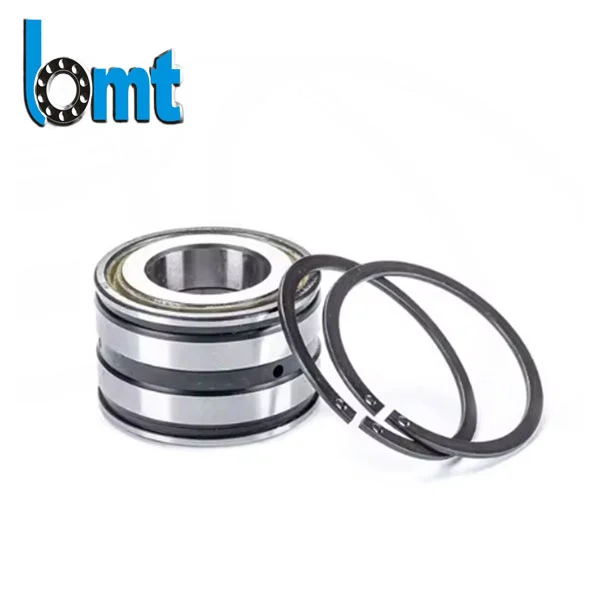
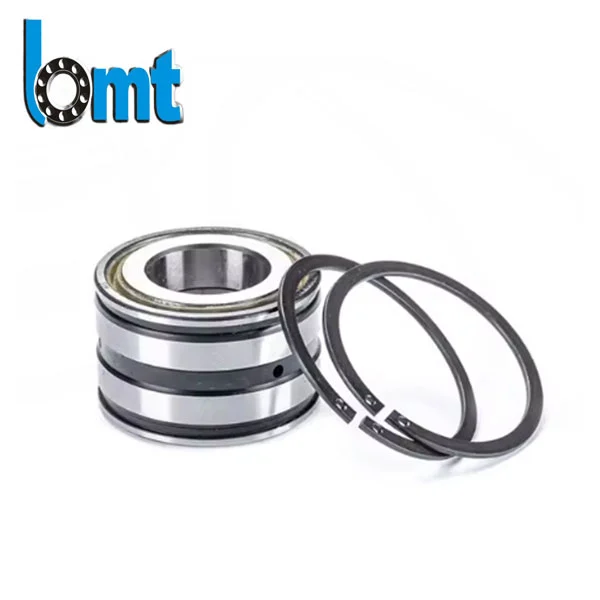
Double row full complement cylindrical roller bearings are engineered to accommodate substantial radial loads by incorporating two rows of cylindrical rollers without a conventional roller cage. This design allows more rolling elements to fit within the bearing assembly, increasing load capacity and supporting high rigidity in demanding industrial environments. This guide explains their operating principles, key advantages, material considerations, application scenarios, maintenance requirements, and purchasing criteria. It also outlines how buyers can evaluate bearing specifications and work with BMT to identify an appropriate solution for their equipment.
1. What Are Double Row Full Complement Cylindrical Roller Bearings?
2. How Does the Bearing Design Work?
3. What Are the Main Performance Advantages?
4. How Do Full Complement Bearings Compare with Caged Bearings?
5. Which Industrial Applications Benefit Most?
6. How Should Buyers Select the Right Bearing?
7. How Can Service Life and Reliability Be Improved?
8. Why Consider BMT for Bearing Sourcing?
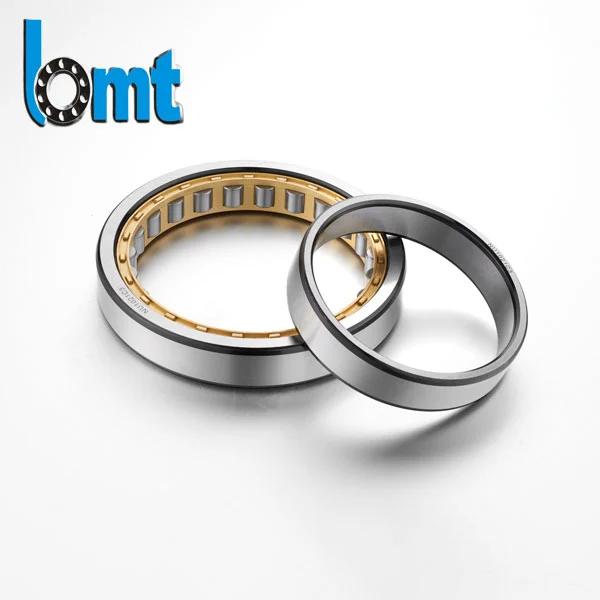
Double row full complement cylindrical roller bearings are rolling-element bearings that feature two rows of cylindrical rollers arranged between inner and outer rings. Unlike conventional caged designs, full complement configurations accommodate a larger number of rollers because they do not use a standard cage to separate the rolling elements.
The increased number of rollers provides more contact area between the rolling elements and raceways. Under appropriate operating conditions, this arrangement enables the bearing to support high radial loads while maintaining the rigidity required by heavy industrial equipment.
These bearings are particularly relevant when machinery must withstand substantial forces within a relatively compact installation space. Typical applications include industrial gearboxes, steel-processing equipment, mining machinery, heavy mechanical drives, and other systems where load capacity is a primary design consideration.
However, a full complement structure does not automatically make a bearing suitable for every heavy-duty application. Its actual performance depends on the bearing series, internal geometry, material quality, lubrication, operating speed, mounting accuracy, and load conditions.
When evaluating a double row full complement cylindrical roller bearing, buyers should therefore review the complete technical specification rather than relying on the product name alone.
The operating principle is based on rolling contact between cylindrical rollers and precision-ground raceways. When a shaft rotates, the rollers move along the raceways, transferring radial forces through the bearing structure and helping the supported component rotate with controlled friction.
Several structural elements determine the performance of the bearing:
In full complement designs, the absence of a conventional cage allows additional rollers to occupy the available internal space. This is a key reason these bearings can provide high radial load capacity and rigidity.
Nevertheless, the increased number of rollers can also increase friction between adjacent rolling elements. Consequently, full complement bearings generally require careful speed evaluation and effective lubrication, especially in continuous-duty machinery.
Engineers should also distinguish between locating, non-locating, and semi-locating bearing arrangements. The ability to accommodate axial loads or shaft displacement depends on the specific design and must be confirmed in the manufacturer's technical documentation.
For equipment exposed to demanding mechanical forces, double row full complement cylindrical roller bearings offer several potential advantages when correctly selected and installed.
The large number of cylindrical rollers helps distribute radial forces across multiple rolling contacts. This makes the design suitable for equipment that carries heavy rotating components or experiences sustained radial loading.
Industrial machinery often requires stable shaft positioning to maintain gear engagement, transmission accuracy, and consistent operating performance. The bearing's robust internal arrangement can help support these requirements under suitable loading conditions.
In applications where radial space is limited, a full complement configuration can provide substantial load capacity without relying on a conventional roller cage. Whether a particular bearing fits the available envelope must still be checked against its actual boundary dimensions.
Steel mills, mining systems, and heavy transmission equipment may expose bearings to persistent loads, vibration, and challenging operating cycles. An appropriately specified bearing can help maintain reliable mechanical support under these conditions.
Correct bearing selection, sufficient lubrication, clean installation, and condition monitoring can help reduce premature failures and unplanned maintenance. The bearing design contributes to reliability, but actual service life depends on the complete operating system.
For demanding installations, buyers should assess load ratings, permissible rotational speed, temperature limits, internal clearance, sealing arrangements, and lubrication requirements together instead of treating any single performance characteristic as decisive.
The main difference between full complement and caged cylindrical roller bearings is the arrangement of the rolling elements. Full complement bearings use more rollers within the available space, while caged bearings maintain separation between rollers through a cage.
This structural distinction influences load capacity, friction, speed capability, and maintenance requirements. The following table summarizes typical design tendencies rather than universal performance guarantees.
| Evaluation Factor | Full Complement Design | Caged Design |
|---|---|---|
| Roller arrangement | More rollers, without a conventional cage | Rollers separated by a cage |
| Radial load capacity | Generally high for comparable design envelopes | Depends on series, roller dimensions, and geometry |
| Friction characteristics | Roller-to-roller contact can increase friction | Cage separation can reduce roller interaction |
| Speed suitability | Often more limited by friction and heat | Often preferable for higher-speed operation |
| Rigidity | Suitable for demanding load-bearing applications | Depends on bearing construction and operating conditions |
| Typical selection priority | High load capacity and compact load-bearing design | Balanced load capacity and rotational speed |
These differences explain why full complement bearings are frequently considered for heavy-duty equipment that operates at moderate speeds. However, the precise operating limits vary by bearing series and manufacturer.
For applications requiring both high radial load capacity and high rotational speed, engineers should compare the relevant load ratings, reference speeds, limiting speeds, and thermal conditions before choosing a design.
For further background, readers can review this overview of cylindrical roller bearings and their industrial applications.
Double row full complement cylindrical roller bearings are useful in industrial systems where radial loads and structural stability are more important than maximizing rotational speed. The exact suitability depends on the bearing design and the machine's operating requirements.
Steel-processing machinery often operates under heavy loads and repeated mechanical stress. Suitable bearings can support rotating shafts and heavy components in equipment such as processing lines, rollers, and industrial drives.
Mining equipment may experience high radial forces, vibration, and demanding operating cycles. Bearings selected for these environments should be evaluated for load capacity, contamination protection, lubrication access, and resistance to the expected operating conditions.
Heavy-duty gearboxes transfer substantial forces between rotating components. Properly selected cylindrical roller bearings can support shaft alignment and radial loads, helping the transmission operate consistently.
Presses, specialized production machinery, and other heavy industrial systems can benefit from bearing configurations designed for high radial loads and rigidity. Engineers should account for shock loading, transient loads, shaft deflection, and mounting tolerances.
Some material-handling systems use heavy rotating shafts, rollers, or pulley assemblies that require robust bearing support. The selected bearing must match the actual load direction, speed, environmental exposure, and housing arrangement.
Before finalizing a bearing for any of these applications, confirm whether the equipment imposes axial loads, accommodates thermal expansion, or requires a locating or non-locating arrangement. These details can significantly influence the correct bearing configuration.
Choosing the correct double row full complement cylindrical roller bearing requires more than matching a shaft diameter. Industrial buyers should assess mechanical requirements, installation conditions, and supplier documentation before placing an order.
Confirm the bore diameter, outside diameter, and overall width against the equipment drawing. Also verify shoulder dimensions, fillet radii, fits, and available mounting space to avoid installation problems.
Review the basic dynamic radial load rating and basic static radial load rating. Dynamic ratings help assess fatigue life under rotating loads, while static ratings are relevant to permanent deformation risks under stationary or slowly moving loads. Actual bearing life also depends on equivalent load, lubrication, contamination, alignment, and operating conditions.
Compare the machine's normal and peak rotational speeds with the manufacturer's specified speed limits. Consider frictional heat, lubrication method, ambient temperature, and duty cycle when evaluating full complement designs.
Internal clearance affects operating temperature, load distribution, and the final operating fit. The correct clearance depends on shaft and housing fits, thermal expansion, operating conditions, and the bearing's construction.
Material cleanliness, heat treatment, raceway finishing, dimensional accuracy, and inspection procedures influence bearing performance. Buyers should request relevant technical data and quality documentation when specifying bearings for critical machinery.
Providing this information early helps a manufacturer evaluate the application more accurately and reduces the risk of ordering a bearing that does not match the operating conditions.
Even a high-capacity bearing can fail prematurely if it is installed incorrectly or operated outside its design limits. A consistent maintenance program is therefore essential to achieving dependable performance.
Use a lubricant that matches the operating speed, temperature, load, and environmental conditions. Insufficient lubrication can cause wear and overheating, while excessive grease can increase churning losses and operating temperature. Follow the bearing manufacturer's recommendations for lubricant selection and replenishment.
Dust, metal particles, moisture, and other contaminants can damage raceways and rolling surfaces. Clean the shaft, housing, tools, and surrounding work area before installation. Keep the bearing protected until it is ready to be mounted.
Improper mounting force, misalignment, or unsuitable fits can damage bearing components. Use approved tools and procedures, and never apply installation force through the rolling elements in a way that can damage the raceways.
Track temperature, vibration, noise, lubrication condition, and changes in machine performance. Unusual trends can indicate misalignment, contamination, inadequate lubrication, or developing damage. Investigate abnormal conditions before they result in extensive equipment failure.
Ensure the bearing operates within its specified load and speed limits. Reassess the selection if the machine is modified, experiences frequent overloads, or begins operating under a different duty cycle.
Preventive maintenance combines correct engineering, clean installation, effective lubrication, and condition monitoring. This approach helps industrial operators manage maintenance costs while improving equipment availability.
When purchasing industrial bearings, product suitability and manufacturing consistency are both important. BMT has specialized in bearing manufacturing since 2004 and supplies bearing products for OEM manufacturers, distributors, and industrial customers in international markets.
For buyers evaluating double row full complement cylindrical roller bearings, BMT's cylindrical roller bearing range provides a starting point for discussing heavy-load applications and technical requirements.
Key considerations when working with a bearing supplier include:
BMT's published cylindrical roller bearing information describes quality-management systems certified to ISO 9001 and IATF 16949, along with inspection processes that include dimensional measurement and vibration and noise testing. Buyers should confirm the scope of applicable certifications and the inspection documentation available for their particular order.
Because performance specifications vary by bearing series, purchasers should verify the exact model, dimensions, load ratings, speed limits, and temperature conditions before finalizing their selection.
Explore the BMT double row full complement cylindrical roller bearings product page for product-specific information and to discuss the requirements of your equipment.
It is a cylindrical roller bearing with two rows of rollers and no conventional roller cage. The increased number of rolling elements allows the bearing to support high radial loads in applications where load capacity and rigidity are important.
Its primary advantage is the ability to accommodate more rollers within the available bearing space. This generally increases radial load-carrying capacity compared with a comparable design that uses fewer rollers, although actual performance depends on the bearing geometry and operating conditions.
They can operate at specified speeds, but their roller-to-roller contact may generate additional friction and heat. For high-speed machinery, compare the manufacturer's limiting speed, lubrication recommendations, and thermal operating limits with the actual machine requirements.
Axial load capacity depends on the bearing's internal design, ribs, and arrangement. Some configurations can accommodate axial loads in one or both directions, while others are primarily intended for radial loads. Always consult the specific manufacturer's documentation.
Common applications include steel mills, mining equipment, heavy-duty gearboxes, industrial transmissions, mechanical presses, and selected material-handling systems. The appropriate bearing depends on the actual load, speed, mounting space, and operating environment.
Provide the bearing designation, dimensions, quantity, operating load, rotational speed, temperature range, lubrication requirements, and application details. Engineering drawings and existing bearing numbers are also useful when evaluating a replacement or customized solution.
Use suitable lubrication, maintain clean installation conditions, apply correct mounting procedures, avoid overloads, and monitor temperature and vibration. Following the manufacturer's maintenance recommendations helps reduce premature wear and operational interruptions.
Share your operating parameters and dimensional requirements with BMT. Request the applicable technical drawing, load ratings, speed limits, clearance specifications, and installation recommendations before confirming the bearing model.
Double Row Full Complement Cylindrical Roller Bearings provide a practical option for industrial equipment that requires high radial load capacity and structural rigidity. Their cage-free roller arrangement allows more rolling elements to fit within the bearing, making them particularly relevant to heavy-duty applications where load support takes priority over maximum rotational speed. Successful selection still depends on accurate load calculations, dimensional compatibility, operating speed, lubrication, and maintenance practices.
BMT can help industrial buyers evaluate cylindrical roller bearing options according to their application requirements. If you are sourcing bearings for steel processing, mining equipment, industrial gearboxes, or other heavy-duty machinery, contact us to discuss your specifications, request technical information, and identify a suitable bearing solution for your project.