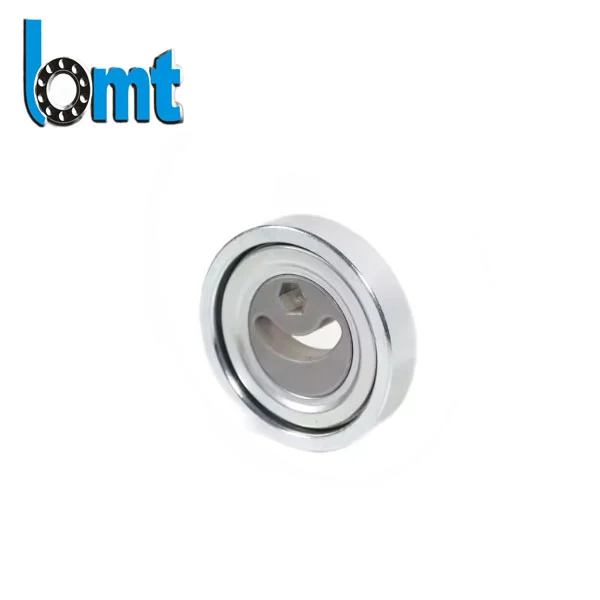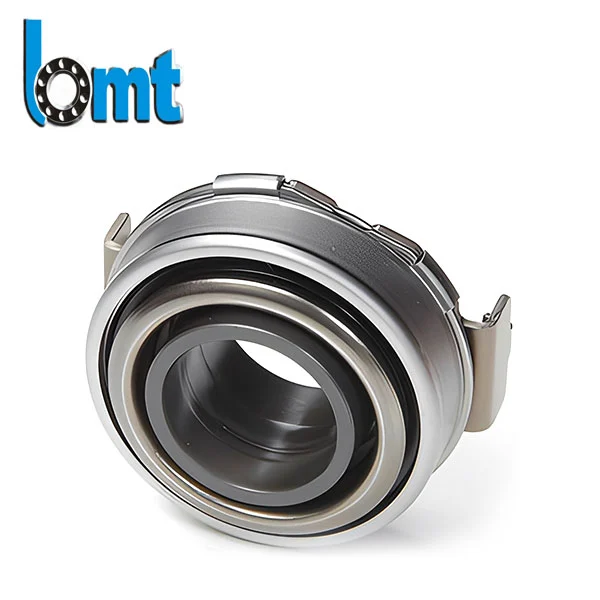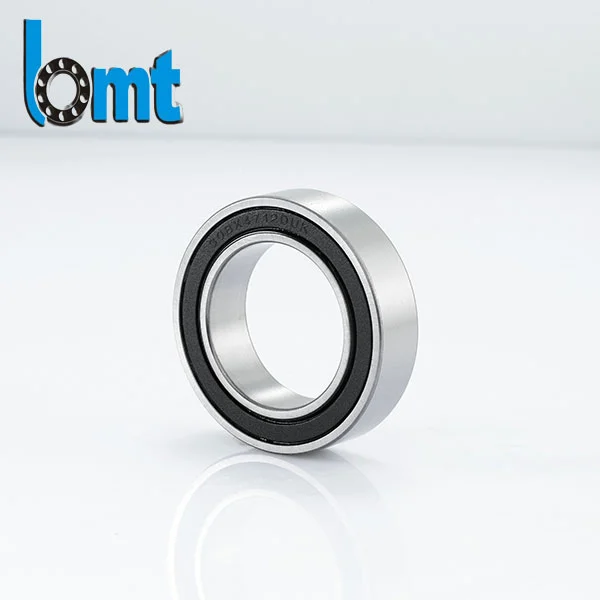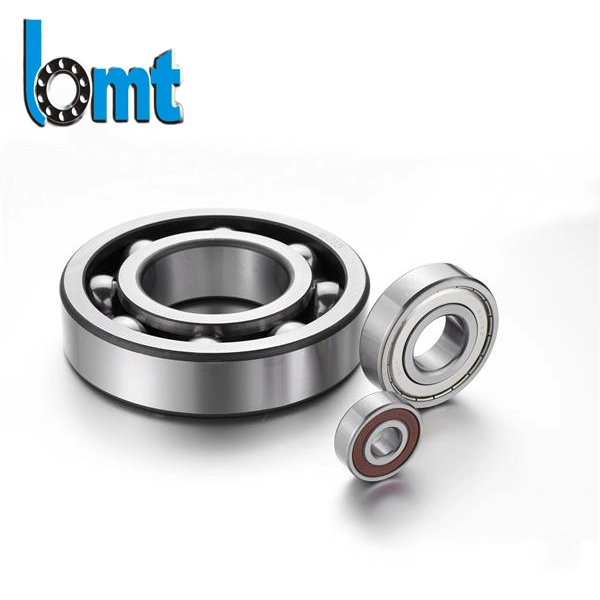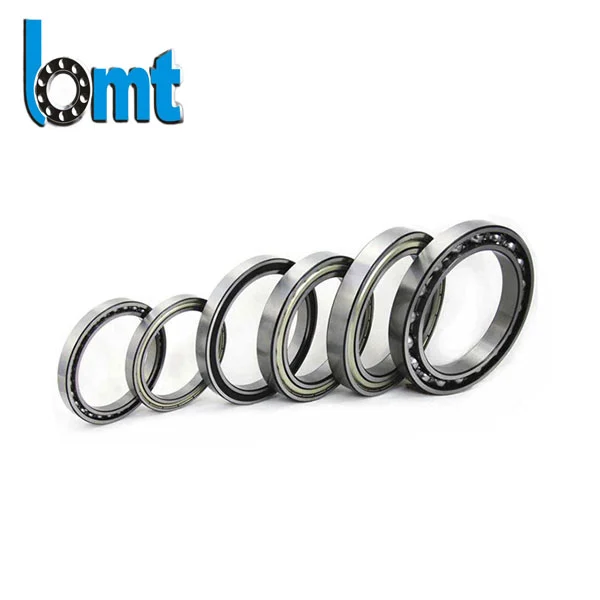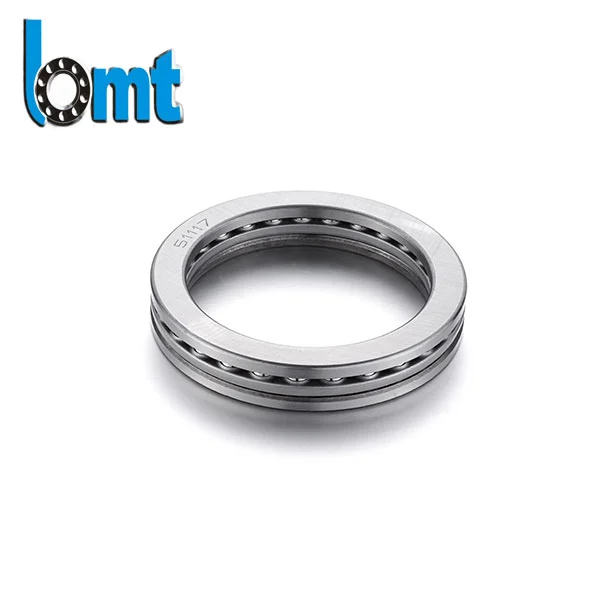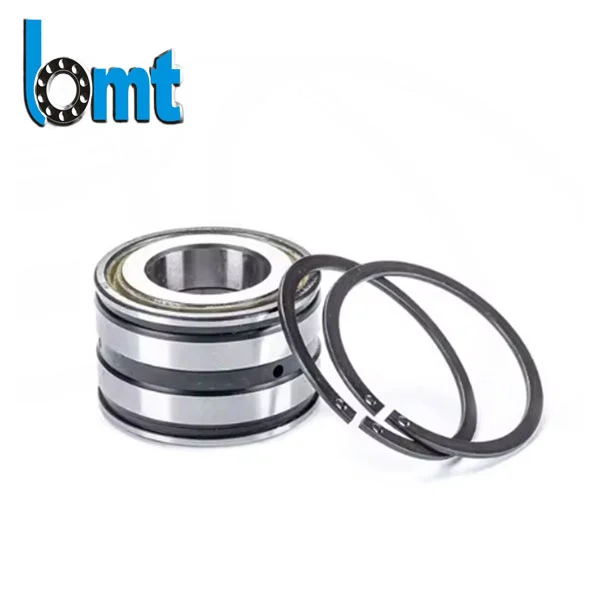
Self-aligning ball bearings are double row radial bearings with a spherical raceway in the outer ring and two continuous groove raceways in the inner ring. The curvature centre of the outer ring raceway coincides with the bearing centre. This geometry allows the inner ring, ball set, and cage to rotate freely around the bearing axis and to compensate for angular misalignment without loss of running accuracy.
The design is intended for applications where shaft deflection, mounting error, or housing distortion cannot be fully corrected during assembly. Compared with single row deep groove ball bearings, self-aligning ball bearings tolerate more initial misalignment and generate lower edge stress on the rolling elements. They are commonly used as Industrial Bearings in general rotating equipment, and also appear in Automotive Bearings for auxiliary drives and Motorcycle Bearing assemblies where compact size and misalignment tolerance are required.
BMT supplies three main series of self-aligning ball bearings. The table below gives a general comparison. Specific dimensions and load ratings vary by bore size and cage type.
The 1200 and 2200 series have a wider outer ring cross section than the 1300 series, which gives them a higher load capacity for a given bore. The 1300 series is more compact and is often used where installation space is limited.
The self-aligning function comes from the spherical outer ring raceway. When the shaft tilts relative to the housing, the inner ring and ball assembly align themselves with the shaft while the outer ring remains fixed. This reduces the internal stress caused by edge loading in rigid single row bearings.
Key operating properties include:
Misalignment compensation up to approximately 3 degrees under light loads, with reduced capacity at higher angles
Lower friction than comparable cylindrical roller or tapered roller bearings in continuous rotation
Moderate axial load capacity in both directions due to the two rows of balls
Suitability for relatively high speeds when used with appropriate lubrication and cage type
The permissible misalignment angle depends on load magnitude. At full radial load, the angle is typically reduced to 1 to 1.5 degrees. For static or slow speed conditions, a misalignment of up to 4 degrees may be acceptable, but this should be confirmed with application calculations.
The cage material affects temperature range, speed capability, and noise level. The following table lists the options available for BMT self-aligning ball bearings.
| Cage Type | Material | Temperature Range | Main Characteristics |
|---|---|---|---|
| Pressed steel | Cold rolled steel | -40°C to +150°C | Standard option, good strength, suitable for most industrial applications |
| Polyamide (PA66-GF25) | Glass fibre reinforced polyamide | -30°C to +120°C | Lower noise, lighter weight, not suitable for ammonia or high temperature |
| Machined brass | Brass alloy | -40°C to +250°C | Higher speed and temperature capability, higher cost, used for larger sizes or special conditions |
Pressed steel is the default cage for 1200 and 1300 series bearings in normal sizes. Polyamide cages are available for bore sizes up to approximately 60 mm where noise reduction is a priority. Brass cages are specified for larger bearings or for applications with high speed and elevated temperature.
Self-aligning ball bearings are specified for equipment where misalignment cannot be avoided. Common applications include:
In these machines, the bearing is often mounted in housings that are welded or bolted to structures with limited machining accuracy. The self-aligning feature prevents the bearing from becoming a source of early failure when the structure deflects under load.
BMT self-aligning ball bearings are produced from high carbon chromium steel equivalent to GCr15 or AISI 52100. Rings are turned from bar or tube stock and heat treated to a surface hardness of HRC 60 to 64. The spherical outer ring raceway is ground on dedicated spherical grinding equipment. The inner ring raceways are ground in a single setup to ensure parallelism and groove position.
The following inspections are performed on each production batch:
Records are maintained by batch number. If a bearing is returned for analysis, the batch number allows BMT to trace the material lot, heat treatment charge, and final inspection results.
When selecting a self-aligning ball bearing, the following parameters should be provided:
Based on these inputs, BMT can recommend a specific series, cage type, seal configuration, and internal clearance. For high misalignment conditions, the load rating should be reduced accordingly. A simplified calculation method uses a misalignment factor that reduces the basic dynamic load rating by up to 50% at the maximum misalignment angle.
The main difference is the outer ring width and load capacity. The 1200 and 2200 series have a wider cross section and can carry higher radial loads for a given bore size. The 1300 series has a narrower profile and is used where space is limited. The misalignment angle is similar across all three series.
In some cases, yes. If the application has known shaft deflection or housing misalignment, a self-aligning bearing can improve service life. However, the axial load capacity of a self-aligning bearing is lower than that of a comparable deep groove ball bearing, and the outer ring is wider, which may require housing modification. A direct replacement should be reviewed by an application engineer.
Excessive misalignment causes the balls to contact the edge of the raceway, producing high stress and early fatigue. The bearing will run hot and noisy before failure. If the measured misalignment is outside the recommended range, consider using a spherical roller bearing or correcting the shaft and housing alignment.
Normal clearance C0 is suitable for standard fits and moderate speeds. For applications with a tight shaft fit or high operating temperature, C3 is commonly specified. The clearance should be verified after mounting. Because self-aligning bearings have a spherical outer ring, the clearance can change slightly when the bearing is pressed into a tapered bore or onto an adapter sleeve.
Yes. Many self-aligning ball bearings are available with a tapered bore for adapter sleeve mounting. The taper is usually 1:12. Adapter sleeves are used on long shafts or in applications where the bearing must be removed frequently. The sleeve should be driven up until the radial internal clearance is reduced by the amount specified in the mounting instructions.