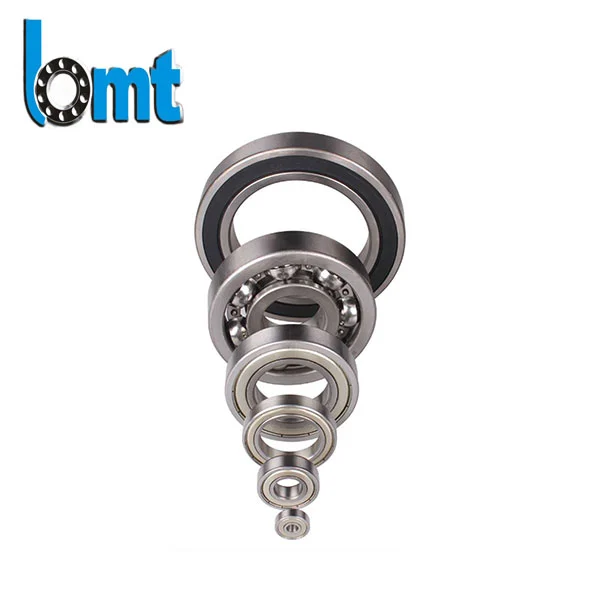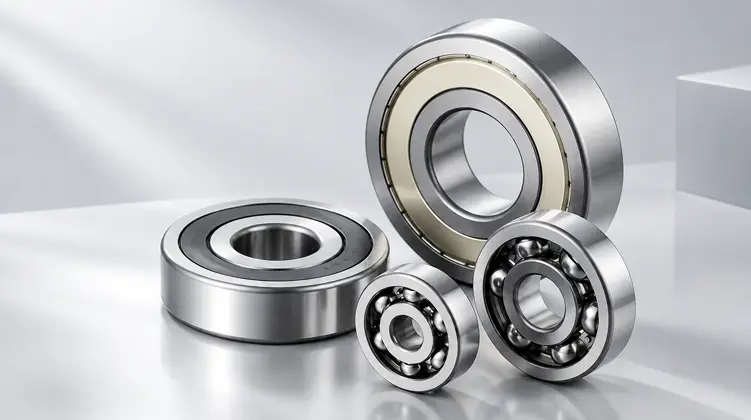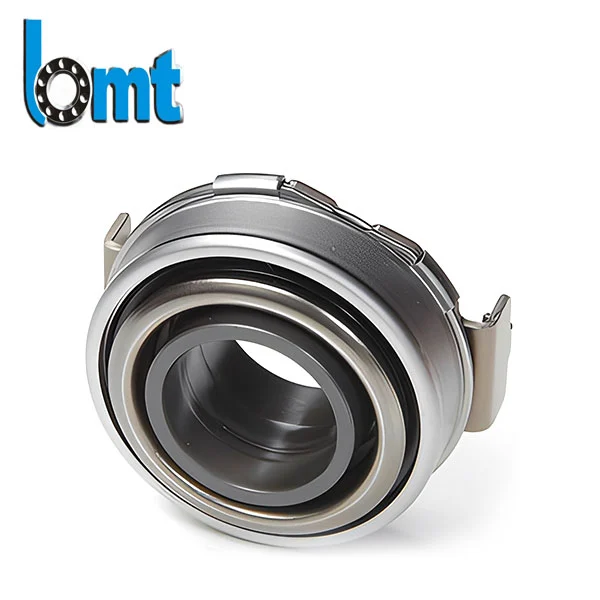
BMT provides precision-engineered Single Direction Thrust Ball Bearings designed to support axial loads in one direction while maintaining smooth and stable rotational performance. Widely used in industrial machinery, electric motors, pumps, automotive systems, and automation equipment, these bearings offer a practical solution for applications requiring accurate shaft positioning, compact installation dimensions, and dependable load transmission. Understanding their construction, performance characteristics, and selection criteria helps manufacturers choose the right bearing for long-term equipment reliability.
Single direction thrust ball bearings are specialized rolling bearings designed to accommodate axial loads acting in one direction. Their separable construction consists of a shaft washer, a housing washer, and a ball-and-cage assembly, making installation and maintenance relatively straightforward. Compared with double direction thrust ball bearings, they provide axial positioning in only one direction and are not designed to carry radial loads.
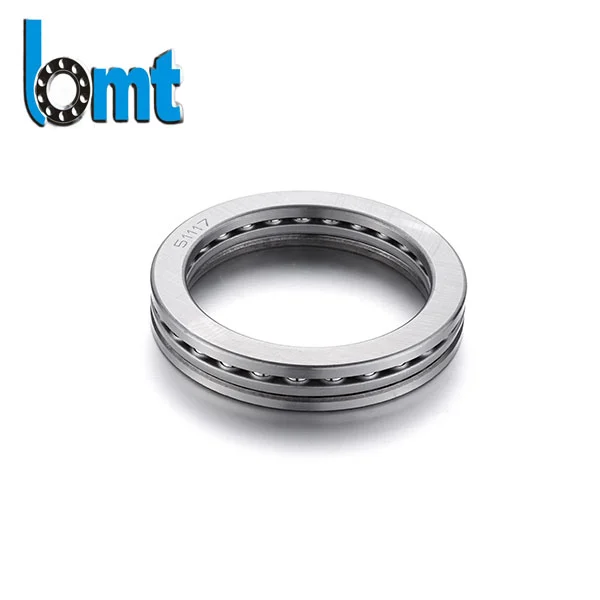
Single direction thrust ball bearings are rolling-element bearings specifically developed to accommodate axial forces acting parallel to a rotating shaft in one direction. Their primary function is to maintain accurate shaft positioning while reducing friction between rotating and stationary components.
Unlike conventional radial bearings, which primarily support loads perpendicular to the shaft axis, thrust ball bearings are designed around axial load transmission. This makes them particularly suitable for mechanical assemblies where axial movement must be controlled without unnecessarily increasing the overall equipment footprint.
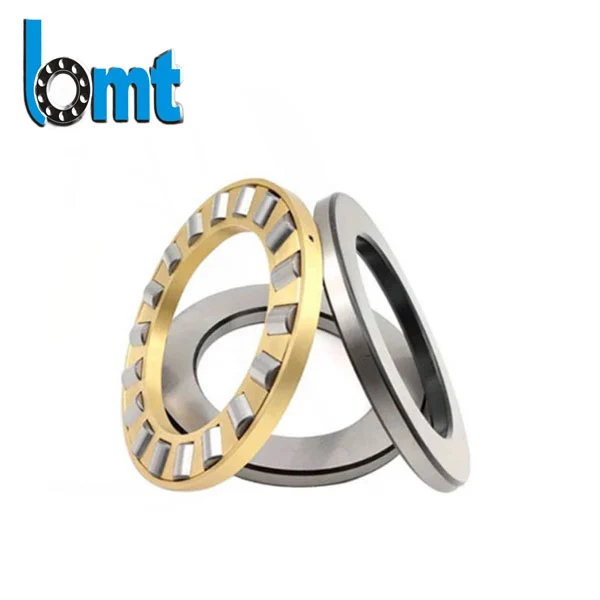
A typical single direction design contains two washers and one ball-and-cage assembly. The shaft washer rotates with the shaft, while the housing washer is installed in the stationary housing. The rolling elements transmit the axial force between these two raceways.
One important engineering consideration is that these bearings are not intended to support radial loads. If an application involves combined radial and axial forces, a separate radial bearing should be incorporated into the bearing arrangement.
For manufacturers seeking reliable axial positioning components, BMT Single Direction Thrust Ball Bearings provide a range of standard bearing models and customization options.
The simple construction of a single direction thrust ball bearing is one of its most important characteristics. Each component performs a specific function to ensure stable axial load transmission and smooth rotation.
The shaft washer is mounted on the rotating shaft and acts as one of the bearing's raceways. It receives axial force from the shaft and transfers that force to the rolling elements. Accurate mounting and proper contact conditions are essential for reliable operation.
The housing washer is installed in the bearing housing and normally remains stationary during operation. It provides the opposing raceway and transfers the axial load from the rolling elements into the supporting machine structure.
The ball-and-cage assembly consists of precision rolling balls held at evenly distributed intervals by a cage. The balls roll between the two washers, reducing friction and maintaining controlled movement during rotation.
The three principal components work together as follows:
Because the components are separable, they can be mounted individually. This feature is especially useful when machinery has restricted installation space or requires convenient bearing replacement.
Choosing an appropriate thrust bearing can directly influence equipment efficiency, positioning accuracy, and maintenance requirements. Single direction thrust ball bearings offer several practical advantages.
The dedicated raceway geometry enables the bearing to accommodate axial forces in one direction. This makes it suitable for mechanical systems where shaft movement must be controlled along a specific axis.
Rolling contact replaces much of the sliding friction found in conventional thrust interfaces. With suitable lubrication and operating conditions, the bearing can deliver smooth movement and help reduce friction-related energy losses.
The relatively simple arrangement allows the bearing to occupy limited axial space. This is beneficial for equipment designers who need reliable thrust support without significantly increasing assembly dimensions.
The separable structure allows the shaft washer, housing washer, and ball assembly to be handled independently. This simplifies assembly procedures and can reduce maintenance complexity.
Properly selected and installed thrust ball bearings help maintain the intended axial position of rotating components. This is particularly important in equipment where shaft displacement can affect mechanical alignment and operating stability.
The established manufacturing technology and relatively uncomplicated design make these bearings an economical option for many applications requiring directional axial load support.
One of the most important decisions during bearing selection is determining whether the application requires axial load support in one direction or both directions.
Although both designs belong to the thrust ball bearing family, their internal structures and operating capabilities are different.
| Comparison Item | Single Direction | Double Direction |
|---|---|---|
| Washer configuration | Two washers | Three washers |
| Ball assemblies | One | Two |
| Axial load direction | One direction | Both directions |
| Shaft positioning | One axial direction | Both axial directions |
| Structural complexity | Relatively simple | More complex |
| Typical application | Unidirectional thrust loads | Bidirectional thrust loads |
Which design should you choose?
Selecting the correct configuration helps avoid unnecessary mechanical complexity and improves the reliability of the overall assembly.
Technical specifications are essential when matching a thrust bearing to an existing shaft, housing, and operating load. Common selection parameters include bore diameter, outside diameter, bearing height, dynamic axial load rating, and static axial load rating.
BMT provides different single direction thrust ball bearing series, including 51100, 51200, 51300, 51400, 53200, and 53300 series. The appropriate model depends on the required dimensions, load capacity, and mounting configuration.
| Model | Bore Diameter d (mm) | Outside Diameter D (mm) | Height T (mm) | Dynamic Axial Rating Ca (kN) | Static Axial Rating Coa (kN) |
|---|---|---|---|---|---|
| 51100 | 10 | 24 | 9 | 10 | 14 |
| 51200 | 10 | 26 | 11 | 12.7 | 17 |
| 51101 | 12 | 26 | 9 | 10.4 | 15.3 |
| 51202 | 15 | 32 | 12 | 16.6 | 25 |
| 51104 | 20 | 35 | 10 | 15 | 26.5 |
| 51205 | 25 | 47 | 15 | 28 | 50 |
| 53206 | 30 | 52 | 17.8 | 25 | 46.5 |
| 53308 | 40 | 78 | 28.5 | 61 | 112 |
Note: The figures above are representative specifications published in BMT's product information. Actual dimensions and load ratings should be confirmed against the complete model catalogue and applicable technical requirements before ordering.
When comparing different models, buyers should pay particular attention to:
For additional dimensions and available configurations, buyers can consult the BMT bearing technical specifications.
Due to their directional axial load capacity and compact construction, single direction thrust ball bearings are used in a variety of mechanical systems.
In selected motor configurations, thrust ball bearings help control axial shaft movement and support forces generated during operation. Correct bearing positioning is important for maintaining mechanical stability.
Pump impellers can generate axial thrust during operation. Depending on the pump design and load arrangement, thrust ball bearings may help accommodate these forces and maintain shaft positioning.
Selected automotive assemblies, including gearbox and clutch-related mechanisms, require controlled axial movement. Thrust bearings can provide support where their load and speed capabilities match the application.
Machine tools, presses, and other industrial equipment may require precise axial positioning. Suitable thrust ball bearings help maintain consistent component alignment during mechanical movement.
Linear actuators and mechanical positioning equipment can generate directional thrust forces. A correctly selected bearing arrangement supports stable movement and helps reduce friction at axial interfaces.
Choosing a suitable bearing requires more than matching the shaft diameter. Engineers and purchasing professionals should evaluate the actual operating environment and mechanical requirements before confirming a model.
It is also important to remember that single direction thrust ball bearings are generally suitable for low-to-moderate-speed applications. High-speed operation requires careful engineering evaluation because centrifugal forces and lubrication conditions can significantly influence performance.
Even a high-quality bearing may experience premature damage if installation procedures are incorrect. Proper handling and routine inspection are therefore essential for maintaining operational reliability.
During operation, maintenance personnel should monitor bearing temperature, noise, vibration, lubrication condition, and unusual axial movement. Changes in these indicators may suggest insufficient lubrication, contamination, excessive loading, or mounting problems.
Replacing damaged components promptly and maintaining clean operating conditions can help prevent secondary damage to shafts, housings, and connected machinery.
Consistency in bearing manufacturing is important for equipment manufacturers purchasing components in standard or bulk quantities. Dimensional accuracy, material properties, surface finish, and rotational performance all influence the final application.
BMT emphasizes inspection throughout the production process, including the following quality-control considerations:
Different machines may require different bearing configurations. In addition to standard models, BMT offers engineering support and customization based on customer drawings, dimensions, and application requirements.
Potential customization considerations include:
For industrial buyers, providing detailed operating information at the inquiry stage helps the engineering team evaluate compatibility and recommend a more appropriate solution.
Learn more about available products and engineering support through BMT Bearings.
A single direction thrust ball bearing supports axial loads acting in one direction. It helps control shaft positioning while allowing smooth rotational movement between the shaft washer and housing washer.
No. These bearings are designed primarily for axial loads and should not be used as radial load-supporting components. Applications involving combined loads generally require an additional radial bearing.
A single direction design supports axial forces in one direction and typically contains two washers and one ball assembly. A double direction design accommodates axial forces in both directions and typically contains three washers and two ball assemblies.
They are generally more suitable for low-to-moderate-speed applications. At higher speeds, centrifugal forces, heat generation, and lubrication conditions can affect service life. Always confirm permissible speed limits with the bearing supplier.
The separable construction allows the shaft washer, housing washer, and ball-and-cage assembly to be installed or removed independently. This makes assembly and maintenance more convenient, especially in equipment with limited access.
Buyers should provide the bearing model, shaft diameter, outside diameter, required quantity, operating speed, axial load, working temperature, lubrication requirements, and application details. Drawings or samples are also helpful when customized specifications are required.
Correct model selection, accurate installation, suitable lubrication, proper load distribution, and regular inspection are essential. Avoiding contamination, excessive loading, and unsuitable operating speeds can also help extend service life.
Single Direction Thrust Ball Bearings are essential components for mechanical systems requiring reliable axial load support in one direction. Their simple separable construction, low-friction rolling contact, compact dimensions, and convenient installation make them suitable for a wide range of industrial applications, including motors, pumps, automotive assemblies, machine tools, and automation equipment.
However, selecting the right bearing requires careful consideration of load direction, operating speed, dimensional compatibility, lubrication, and environmental conditions. Working with an experienced bearing supplier can help reduce selection errors and improve the reliability of the complete mechanical assembly.
Looking for dependable thrust bearing solutions for your industrial equipment or OEM projects? BMT offers standard single direction thrust ball bearing models, technical selection support, and customized bearing services based on your application requirements. Whether you need standard specifications or a tailored solution, contact us today with your drawings, dimensions, and purchasing requirements to discuss the right bearing solution for your business.