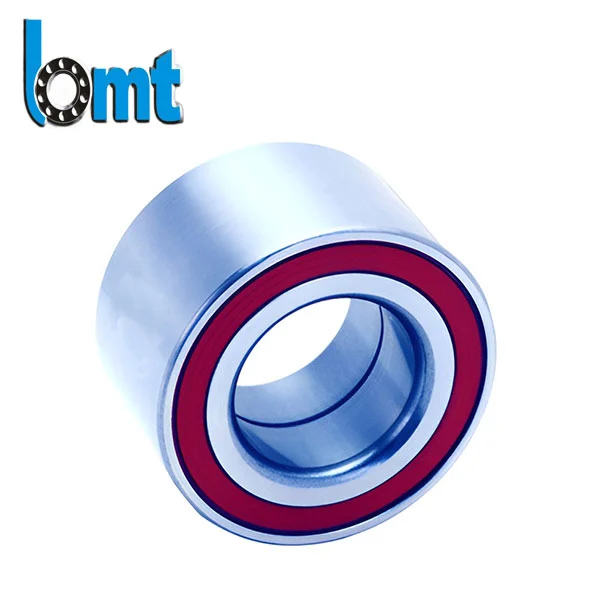
A wheel-end bearing has a job that is easy to describe but demanding to manufacture: it must allow the wheel to rotate while carrying vehicle weight, cornering forces, braking loads, and road impacts. At the same time, the assembly must maintain accurate wheel positioning and protect its internal rolling surfaces from water, dust, and road contamination.
For this reason, Wheel Hub Bearings are not selected by bearing dimensions alone. Bearing type, flange geometry, preload, internal clearance, sealing, mounting accuracy, ABS encoder configuration, and the actual vehicle load all affect the performance of the complete wheel-end assembly.
A wheel bearing does not experience one simple load.
During normal driving, the wheel-end assembly can be subjected to:
Radial loading from vehicle weight and road impacts.
Axial loading generated during cornering and other lateral vehicle movements.
Braking loads transferred through the wheel and hub assembly.
Impact loads caused by potholes, curbs, uneven roads, and other road conditions.
Moment loads resulting from the distance between the bearing and the wheel, brake disc, or other components.
The load distribution becomes particularly important when the wheel, brake rotor, and hub are positioned some distance away from the bearing centerline. This creates an overturning moment that can influence bearing selection and service life.
The bearing material and internal construction need to be selected according to the application rather than treated as fixed specifications for every model.
Typical wheel-end bearing construction may include:
|
Component |
Common Material / Configuration |
|
Bearing rings |
Bearing steel such as GCr15 |
|
Rolling elements |
Steel balls or tapered rollers |
|
Cage |
Steel or reinforced polymer, depending on design |
|
Hub flange |
Forged or machined steel |
|
Seals |
Application-specific rubber sealing system |
|
ABS encoder |
Magnetic encoder integrated into the sealing or bearing assembly |
GCr15 bearing steel is widely used for rolling bearing rings and rolling elements because it provides the hardness and fatigue properties required for bearing applications when correctly processed and heat treated.
For an automotive hub unit, however, material selection is only one part of the engineering equation. Heat treatment, grinding accuracy, raceway geometry, surface condition, lubrication, sealing, preload, and assembly quality all contribute to the final result.
Wheel bearings operate in one of the most exposed areas of a vehicle.
Water, road salt, mud, dust, and fine abrasive particles can reach the wheel-end assembly. A damaged or poorly matched seal can allow contaminants to enter the bearing and accelerate lubricant degradation, corrosion, and raceway damage.
The sealing system therefore needs to be considered together with:
· Wheel speed
· Temperature
· Water exposure
· Contaminant level
· Grease compatibility
· Shaft or flange geometry
· Available installation space
For replacement parts, using a bearing with the correct dimensions but an unsuitable sealing configuration can result in premature problems.
Modern hub assemblies may include a magnetic encoder for wheel-speed sensing.
This creates an additional requirement that does not exist in a conventional bearing: the bearing assembly must provide the correct magnetic sensing characteristics and installation orientation.
When replacing a hub bearing with an integrated encoder, technicians should confirm:
· ABS encoder type
· Sensor compatibility
· Encoder orientation
· Sensor position
· Mounting direction
· Vehicle-specific electronic requirements
An ABS-related fault after bearing replacement does not necessarily mean that the rolling bearing itself has failed. Incorrect installation orientation, sensor damage, connector problems, or an incompatible encoder can also affect the wheel-speed signal.
BMT can develop wheel bearing and hub assembly configurations according to the vehicle platform and customer drawing.
Typical dimensional requirements may include:
|
Parameter |
Typical Range / Requirement |
|
Bearing outer diameter |
45–90 mm |
|
Hub flange outer diameter |
120–180 mm |
|
Assembly width |
35–60 mm |
|
Wheel mounting pattern |
Application dependent, commonly 4- or 5-lug configurations |
|
Rolling element |
Ball or tapered roller |
|
Cage |
Steel or reinforced polymer |
|
Seal |
Application-specific sealed configuration |
|
ABS function |
Available for applicable integrated hub designs |
These figures are reference ranges for the product category rather than universal specifications. Exact dimensions, load ratings, speed limits, flange geometry, and sensor configuration should be confirmed using the OE number, drawing, sample, or vehicle application.
When a hub bearing fails earlier than expected, replacing the bearing without identifying the cause can lead to repeated failures.
Pressing force applied through the wrong bearing ring can damage the raceway or rolling elements. Improper installation can also affect bearing preload and internal geometry.
Potholes, curbs, accidents, and severe road impacts can introduce loads significantly different from normal operating conditions.
Damaged seals or prolonged exposure to water and road contaminants can affect the lubricant and rolling surfaces.
For hub assemblies secured with an axle nut or similar fastener, the specified tightening procedure is important. Excessive or insufficient torque can influence bearing preload and operating condition.
Wheel imbalance, worn suspension components, incorrect alignment, or abnormal tire conditions can introduce additional vibration and loading into the wheel-end system.
A good replacement program therefore considers the surrounding wheel-end components rather than treating the bearing as the only possible source of the problem.
BMT has been engaged in bearing manufacturing since 2004 and developed non-standard bearing products from an early stage of its business. Its manufacturing operations include automated grinding, bearing assembly, precision measurement, and inspection processes.
The company has approximately 100 sets of automated grinding and production equipment and an annual bearing production capacity of around 100 million sets.
For automotive bearing production, consistency between batches is particularly important. Critical characteristics can include bore and outer-diameter accuracy, raceway geometry, rotational condition, clearance, flange dimensions, sealing installation, and assembly position.
BMT's production experience covers standard bearing manufacturing as well as customized and non-standard projects, allowing specifications to be developed around the customer's application rather than limited to an existing catalog size.
Vehicle manufacturers, aftermarket distributors, repair-system suppliers, and hub assembly manufacturers may require bearings that are not directly available as standard catalog products.
BMT can evaluate customized projects based on:
· Customer drawings
· Existing hub assemblies
· Bearing samples
· OE reference numbers
· Vehicle application information
· Required flange dimensions
· Bearing load requirements
· ABS encoder requirements
· Sealing requirements
· Annual production quantity
For a new project, supplying both the bearing sample and the corresponding hub or shaft information can significantly reduce identification errors during the initial engineering evaluation.
Automotive wheel-end components require control of both bearing manufacturing and final assembly.
Depending on the project specification, inspection can cover:
|
Inspection Area |
Purpose |
|
Dimensional inspection |
Confirm critical bearing and flange dimensions |
|
Raceway inspection |
Control geometry and surface condition |
|
Clearance / preload |
Confirm required internal operating condition |
|
Rotation inspection |
Identify abnormal friction or rotation behavior |
|
Noise and vibration |
Monitor running characteristics |
|
Seal inspection |
Verify correct installation and sealing condition |
|
ABS encoder inspection |
Confirm applicable magnetic or sensing characteristics |
|
Final assembly inspection |
Verify overall hub unit dimensions and configuration |
The exact inspection plan should be agreed with the customer according to the product drawing, automotive application, and quality requirements.
BMT wheel bearing and hub assembly solutions can be developed for:
· Passenger cars
· SUVs
· Pickups
· Light commercial vehicles
· Electric vehicles
· Hybrid vehicles
· Automotive aftermarket replacement
· Wheel hub assembly manufacturers
· Vehicle repair and remanufacturing
EV and hybrid applications deserve particular attention because lower drivetrain noise can make wheel-end noise more noticeable. Bearing selection therefore needs to consider not only load capacity but also rotational smoothness, sealing, lubrication, and noise characteristics.
A wheel hub bearing supports the wheel-end assembly and allows the wheel to rotate while carrying radial, axial, and dynamic loads generated during driving, braking, and cornering.
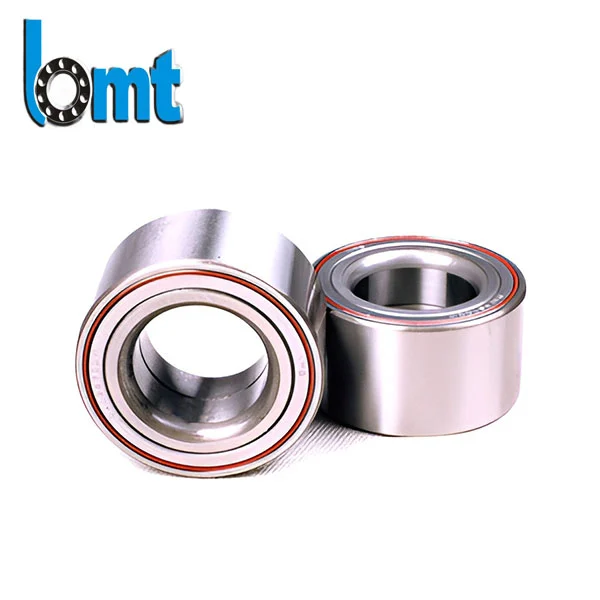
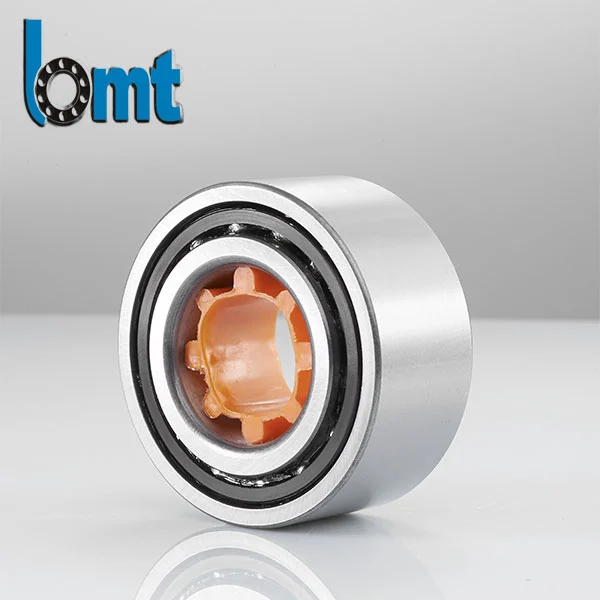
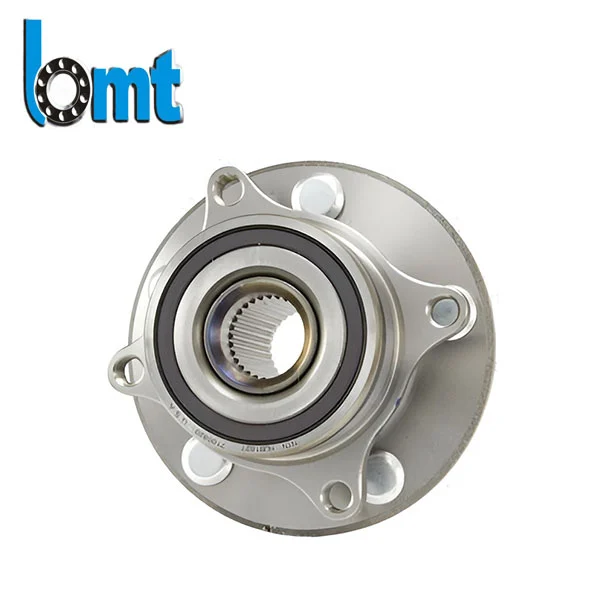
A conventional wheel bearing is primarily the rolling bearing itself. A hub bearing assembly can integrate the bearing with a flange, wheel mounting structure, seals, and sometimes an ABS encoder or sensor interface.
The OE part number or original bearing number is the best starting point. Vehicle make, model, year, wheel position, and drivetrain information can also help. For difficult applications, provide the original bearing or hub assembly for dimensional verification.
Not necessarily. Gen 3 designs commonly integrate an ABS encoder or wheel-speed sensing function, but the exact arrangement depends on the vehicle and hub design. The encoder, sensor, and connector configuration should be confirmed for the specific application.
It depends on the vehicle's wheel-end design. Some vehicles use serviceable bearings that can be replaced separately, while integrated hub units are supplied as complete assemblies.
Common causes include bearing fatigue, contamination, inadequate lubrication, impact loading, incorrect installation, improper preload, or damage to the surrounding wheel-end components.
Yes. If the hub assembly includes an ABS encoder or sensor and that component is damaged, incorrectly installed, or incompatible with the vehicle system, the wheel-speed signal can be affected.
It is critical for applications using a specified axle-nut or mounting torque. Incorrect tightening can change bearing preload and operating conditions. Installation should follow the vehicle or component manufacturer's specified procedure.
Yes. BMT has experience developing non-standard bearing products and can evaluate customized bearing or hub assembly requirements using drawings, samples, OE references, and application parameters.
Complete hub-unit configurations can be evaluated according to the customer's vehicle application and design requirements, including bearing, flange, sealing, and applicable ABS encoder integration.
For an exact application review, send the OE number, bearing number, drawing, sample, or vehicle application details. BMT can then evaluate the required dimensions, bearing configuration, sealing arrangement, ABS integration, and production requirements before confirming the suitable specification.
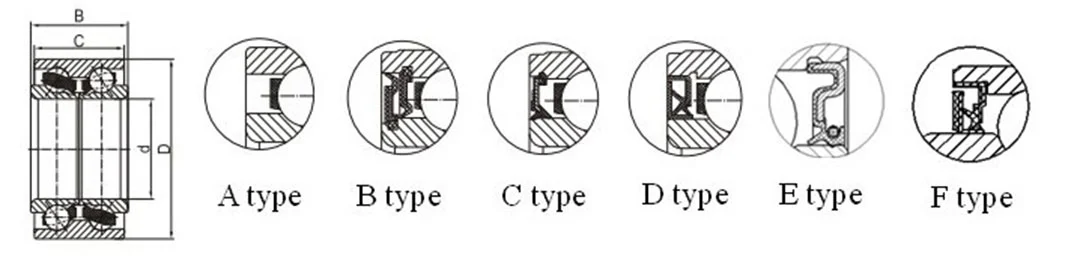
| Part number | Dimensions(mm) | Seal | Ball×Num | |||
| d | D | B | C | |||
| 565592J-22 | 20 | 42 | 30 | 29 | C | |
| DAC255200206 | 25 | 52 | 20.6 | 20.6 | ||
| DAC25520037 | 25 | 52 | 37 | 37 | B C D | 8.731×24 |
| DAC25520040 | 25 | 52 | 40 | 40 | C | 8.731×24 |
| DAC25520042 | 25 | 52 | 42 | 42 | A C E | 8.731×24 |
| DAC25520043 | 25 | 52 | 43 | 43 | C D | 8.731×24 |
| DAC25550043 | 25 | 55 | 43 | 43 | C | 9.525×24 |
| DAC25550045 | 25 | 55 | 45 | 45 | C D | 9.525×24 |
| DAC25550048 | 25 | 55 | 48 | 48 | C D | 9.525×24 |
| DAC25550053.5 | 25 | |||||
Address
No.183,Longfeng,West of Zhangting industrial Zone,Yuyao,Ningbo,China
Tel