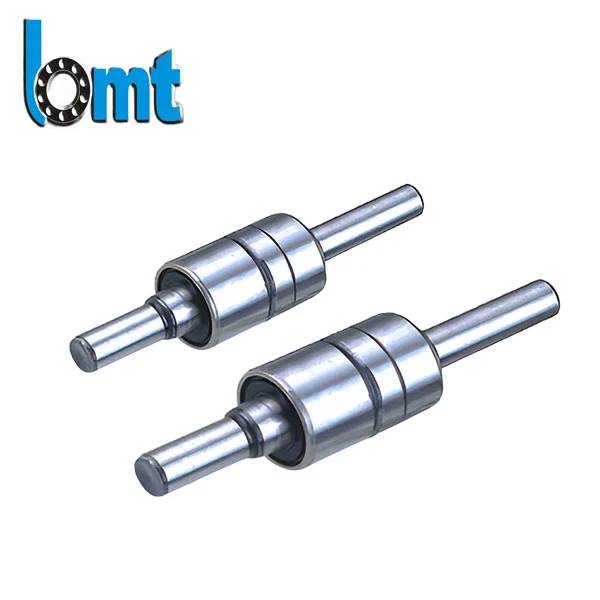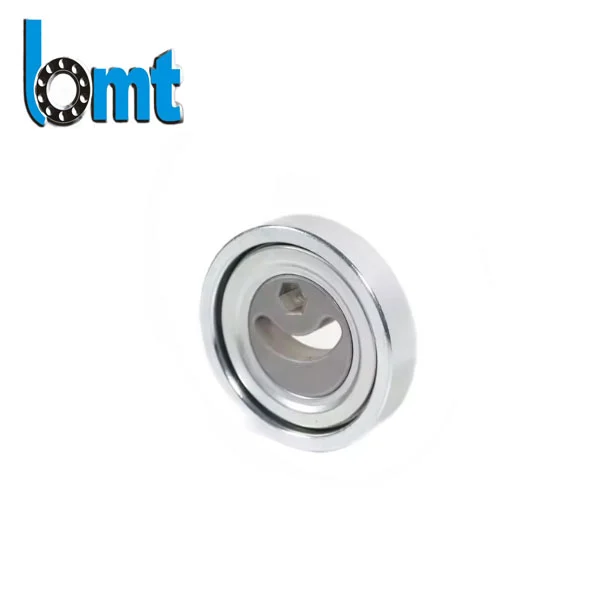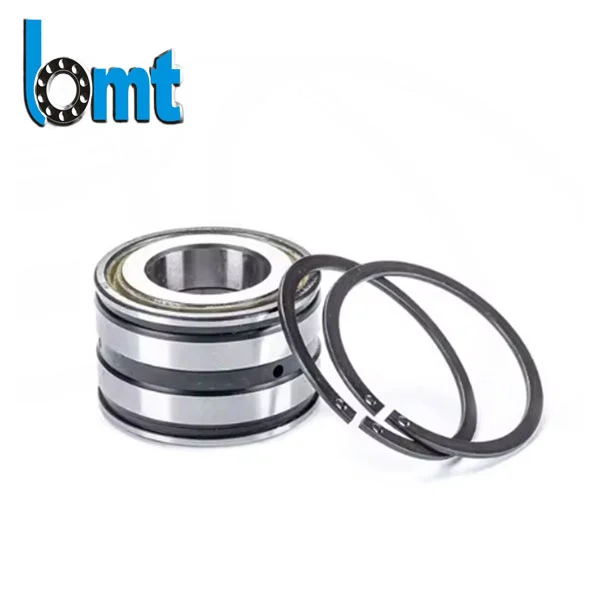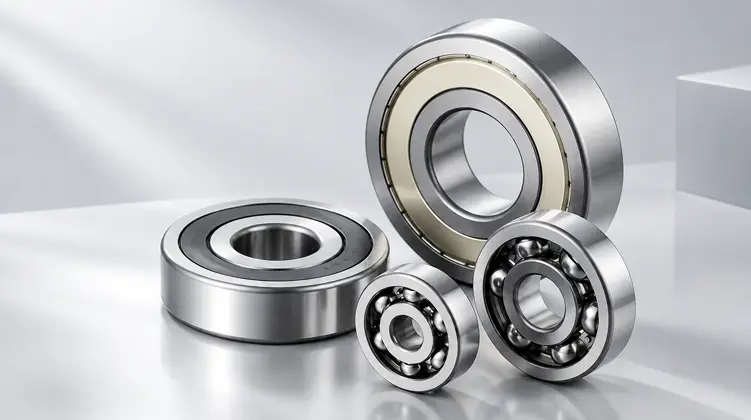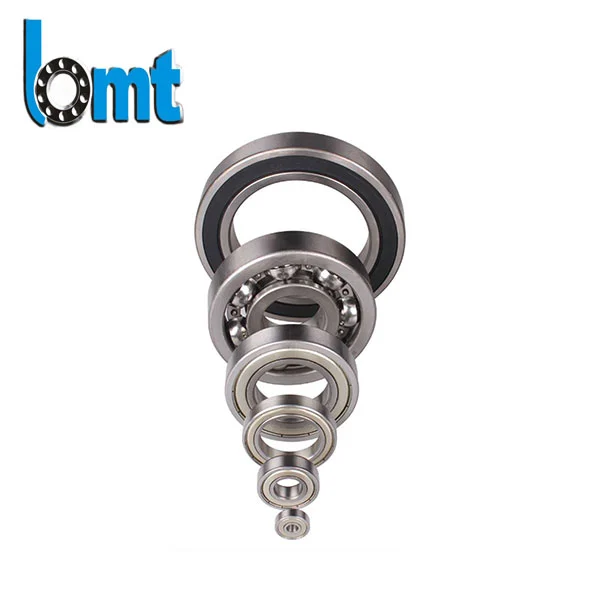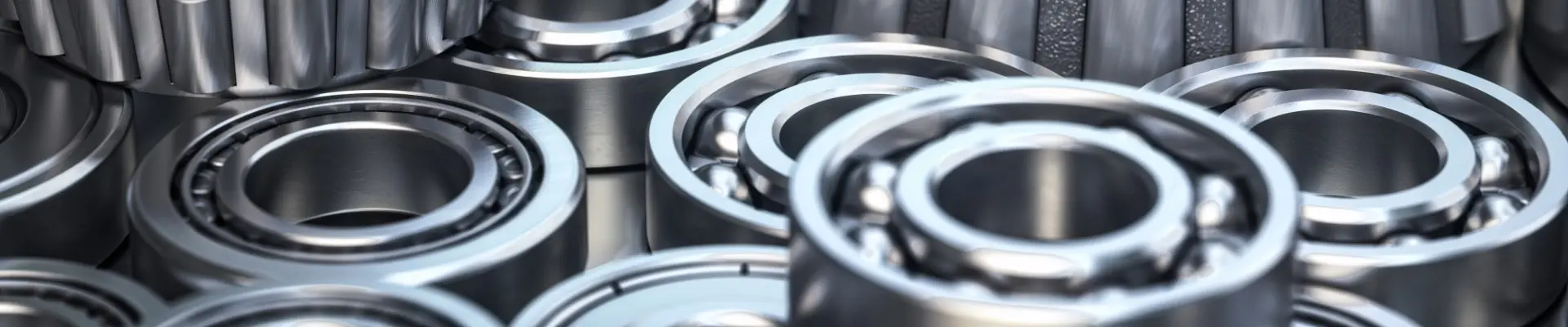
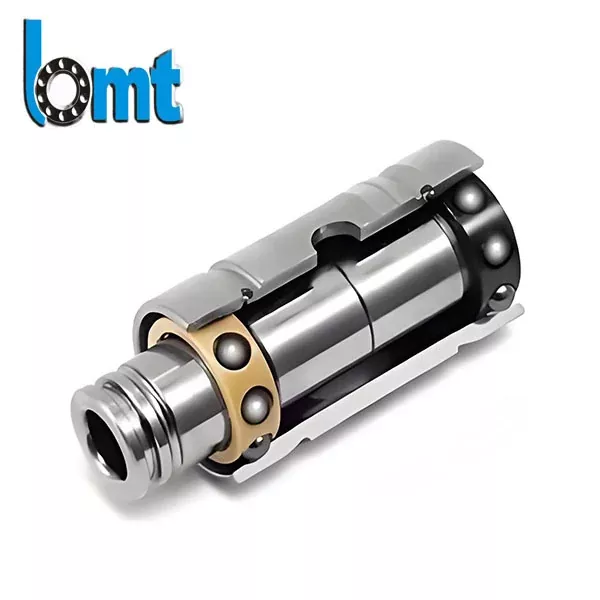
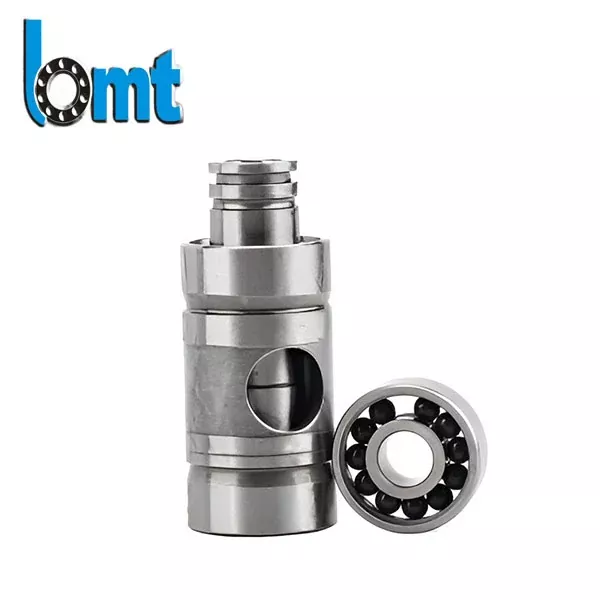
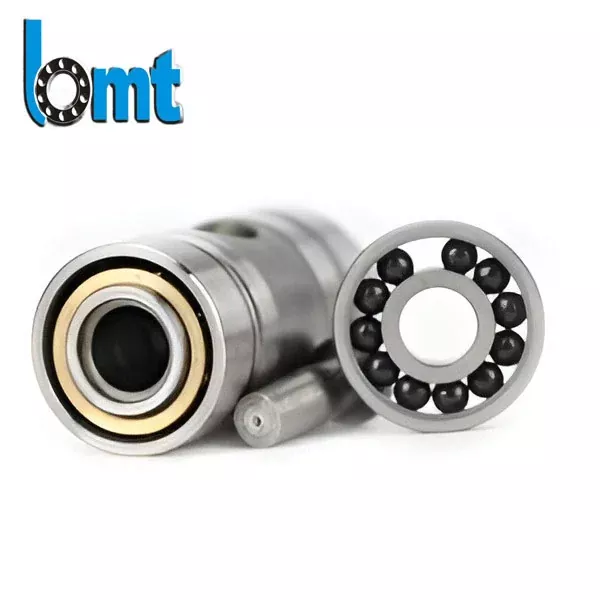
Turbocharger bearings support the rotating shaft inside a turbocharger, where high rotational speed, elevated temperature, oil-film stability, and tight dimensional tolerances directly affect rotor performance. Unlike bearings used in conventional machinery, turbocharger applications require careful control of radial clearance, bearing geometry, surface finish, cage design, material selection, and lubrication conditions.
BMT develops and manufactures precision bearing solutions for high-speed rotating equipment, including customized and non-standard bearing designs. Since 2004, DEMY (D&M) Bearings Co., Ltd. has accumulated experience in bearing manufacturing and non-standard bearing development, supported by automated grinding, assembly, and inspection processes. For turbocharger applications, bearing selection can be matched to the shaft dimensions, operating speed, temperature, lubrication system, and specific turbocharger model.
Turbocharger rotors can operate at very high rotational speeds, creating strict requirements for bearing geometry, dimensional accuracy, surface finish, and lubrication. The BMT range includes models with limited speeds from 80,000 to 180,000 r/min, depending on the bearing specification and application.
At these speeds, even small deviations in roundness, clearance, or concentricity can influence vibration, friction, and service performance. Bearing selection should therefore be based on the complete rotor and lubrication system rather than speed alone.
The bearing environment is affected by heat transferred from the turbine side, hot exhaust gases, shaft temperature, and lubrication conditions. The listed BMT models have a limited temperature rating of up to 600°C, subject to the specific bearing configuration and operating conditions.
Temperature capability depends not only on the bearing material but also on cage construction, lubricant, cooling conditions, load, speed, and actual temperature at the bearing position.
Different operating conditions require different cage configurations. The listed models can be supplied with PEEK, brass cage, or metal cage configurations.
PEEK cages can be considered where low mass, dimensional stability, and resistance to demanding operating environments are required. Brass and other metal cage configurations provide alternative solutions for applications where mechanical strength, temperature resistance, or specific lubrication conditions are more important.
The appropriate cage should be selected together with the bearing speed, temperature, lubricant, load, and installation conditions.
The following models are designed for specific GT and GTX turbocharger applications. Dimensions and operating limits should be confirmed against the actual turbocharger assembly before selection.
|
Model |
ID (mm) |
OD (mm) |
Height (mm) |
Limited Speed (r/min) |
Limited Temperature |
Cage Material |
Application |
|
HP5.218G34.2 |
6 |
18 |
34.2 |
180,000 |
600°C |
PEEK, brass cage, metal |
GT17 / GT20 / GT25 |
|
HP60G01 |
8 |
22 |
53.73 |
150,000 |
600°C |
PEEK, brass cage, metal |
GT25R / GT28R / GT30R / GT35R |
|
HP0822G07 |
8 |
22 |
41.95 |
150,000 |
600°C |
PEEK, brass cage, metal |
GT25R / GT28R / GT30R / GT35R |
|
HP1028G03 |
10 |
28.2 |
55.2 |
120,000 |
600°C |
PEEK, brass cage, metal |
GTX37 / GTX40 / GTX42 / GTX45 |
|
HP1028G05 |
10 |
28.2 |
44.55 |
100,000 |
600°C |
PEEK, brass cage, metal |
GTX37 / GTX40 / GTX42 / GTX45 |
|
HP1335G01 |
13 |
34.8 |
64.08 |
80,000 |
600°C |
PEEK, brass cage, metal |
GT42 / GT45 |
Note: The listed speed and temperature values are limited ratings for the corresponding models, not universal operating limits for all turbochargers. Actual service conditions should be evaluated according to the bearing design, lubrication, load, shaft speed, cooling arrangement, and turbocharger configuration.
For turbocharger replacement or new development, dimensional compatibility is only the first step. Engineers and purchasing teams should confirm the following parameters before placing an order:
|
Selection Parameter |
What to Confirm |
|
Bearing ID |
Match the turbocharger shaft diameter and required running clearance |
|
Bearing OD |
Confirm compatibility with the bearing housing or bore |
|
Bearing height |
Match the axial installation space and rotor position |
|
Operating speed |
Compare actual rotor speed with the bearing's limited speed |
|
Temperature |
Evaluate the actual bearing temperature rather than exhaust temperature alone |
|
Cage material |
Select according to speed, temperature, lubrication, and mechanical requirements |
|
Lubrication |
Confirm oil type, viscosity, supply pressure, flow, and cooling conditions |
|
Radial load |
Evaluate rotor weight, gas forces, imbalance, and dynamic loading |
|
Axial load |
Check thrust-related loading and the complete bearing arrangement |
|
Clearance |
Match internal clearance to shaft fit, temperature, speed, and lubrication |
|
Installation accuracy |
Control shaft and housing geometry, concentricity, and surface condition |
For example, HP5.218G34.2 has a 6 mm ID, 18 mm OD, and 34.2 mm height, with a listed limited speed of 180,000 r/min. It is specified for GT17, GT20, and GT25 applications. A different model should not be substituted only because its dimensions appear similar; rotor position, clearance, lubrication, and operating conditions also need to be verified.
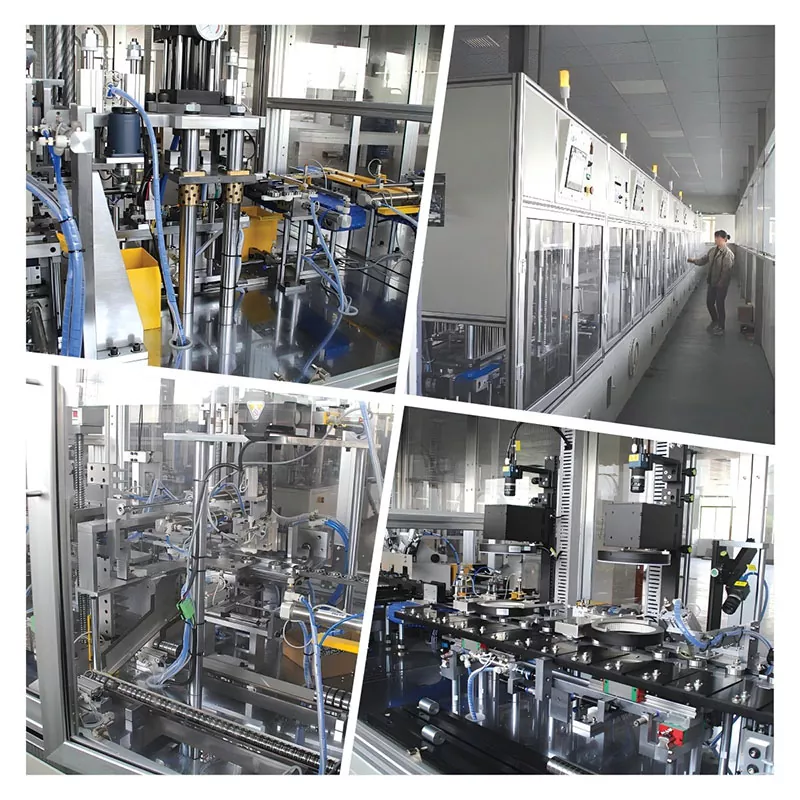
BMT's bearing manufacturing system covers material handling, precision grinding, assembly, measurement, and final inspection. The company operates approximately 100 sets of automated grinding and production equipment, together with automated assembly lines and precision measuring and testing instruments.
With annual production capacity reaching approximately 100 million bearing sets, BMT can support both standard production and project-based requirements. Manufacturing controls are applied from incoming materials through finished bearing inspection to maintain dimensional consistency between production batches.
Turbocharger manufacturers, remanufacturers, and distributors may require bearings with non-standard dimensions, specific cage materials, customized clearances, or application-specific configurations.
BMT has experience in non-standard bearing development, dating back to its early bearing manufacturing activities. The company can evaluate drawings, samples, application requirements, and technical specifications for customized bearing projects.
For an OEM or replacement project, customers can provide:
1. Existing bearing model or part number
2. ID, OD, and height
3. Turbocharger model
4. Shaft dimensions
5. Maximum operating speed
6. Operating temperature at the bearing position
7. Lubrication method
8. Required cage material
9. Required quantity and annual demand
10. Drawing or sample, if available
This information helps engineers determine whether an existing model is suitable or whether a customized design is required.
These high-speed bearing configurations can be used in turbocharger assemblies associated with GT and GTX series applications, including:
· Passenger vehicle turbochargers
· Commercial vehicle turbochargers
· Automotive turbocharger repair and remanufacturing
· Performance turbocharger systems
· Turbocharger replacement components
· High-speed rotating assemblies
The specific model should always be matched to the corresponding turbocharger design rather than selected solely by vehicle type or nominal dimensions.
Turbocharger bearings operate under higher rotational speeds and more demanding thermal and lubrication conditions. Their design therefore requires tighter consideration of clearance, surface finish, cage construction, lubrication, and dimensional accuracy.
Among the listed models, HP5.218G34.2 has the highest limited speed at 180,000 r/min. Other models are rated at 150,000, 120,000, 100,000, or 80,000 r/min according to their individual specifications.
The supplied specifications list a 600°C limited temperature for all six models. However, this should not be interpreted as a universal bearing operating temperature. Actual allowable temperature depends on the bearing position, cage material, lubricant, speed, load, and cooling conditions.
Yes, PEEK cage configurations can be used for selected high-speed applications. However, cage selection must consider speed, temperature, lubrication, mechanical loading, and the specific bearing design.
Yes. BMT has experience in non-standard bearing development and can evaluate custom dimensions, cage materials, clearances, and application requirements based on customer drawings, samples, or technical specifications.
Both models have an 8 mm ID, 22 mm OD, 150,000 r/min limited speed, and are specified for GT25R, GT28R, GT30R, and GT35R applications. Their key dimensional difference is height: HP60G01 is 53.73 mm, while HP0822G07 is 41.95 mm. The correct choice should therefore be confirmed against the turbocharger assembly and installation dimensions.
Yes. Clearance affects oil-film formation, heat generation, shaft movement, and rotor stability. Excessive or insufficient clearance can both cause problems, so the appropriate value should be determined from the shaft, housing, temperature, speed, and lubrication conditions.
Sample evaluation can be arranged for suitable projects. Providing the existing bearing, drawing, turbocharger model, or dimensional requirements allows BMT to confirm the appropriate specification before larger-volume production.
Address
No.183,Longfeng,West of Zhangting industrial Zone,Yuyao,Ningbo,China
Tel